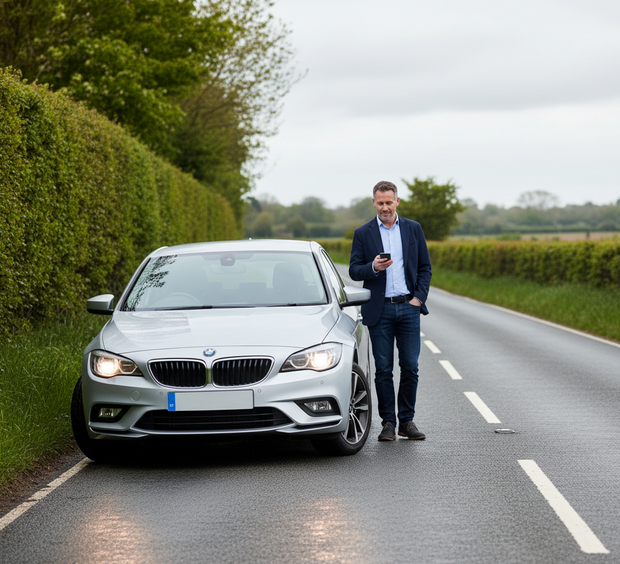
How Much Does Breakdown Cover Cost?
A Complete Guide for UK Drivers
Introduction
Breakdown cover is one of those purchases where the range of prices on the market can be genuinely baffling. You can pay £25 a year with one provider and £250 with another — and on the surface, the cover looks remarkably similar. So what explains the difference, and what should you actually expect to pay?
This guide cuts through the confusion. We explain exactly what drives the cost of breakdown cover in the UK, what a fair price looks like at each level of cover, how the major providers compare on price right now, and the legitimate ways to reduce what you pay without compromising on the protection you actually need.
Whether you are buying for the first time, coming up for renewal, or simply wondering whether you are being overcharged, this guide gives you the full picture.
What Factors Affect the Cost of Breakdown Cover?
The price of your breakdown cover policy is not arbitrary. Several well-defined factors determine what you will pay, and understanding them is the first step to getting the right cover at the right price.
1. The Level of Cover You Choose
This is the single biggest driver of cost. Breakdown cover is sold in tiers, and each tier adds a meaningful layer of protection — and a corresponding increase in price.
- Roadside Assistance — the most basic level. A patrol attends your vehicle and attempts a roadside repair. If they cannot fix it, your vehicle is towed to a local garage. You are typically not covered if you break down within a quarter of a mile of your home address. This is the cheapest tier.
- Recovery — includes everything in Roadside Assistance, plus your vehicle and passengers can be transported to any UK destination of your choice, not just the nearest garage. This is essential if you regularly drive long distances.
- Home Start — extends your cover to include breakdowns at or near your home address. More common than most people expect, since flat batteries and tyre faults frequently occur on driveways or in car parks close to home.
- Onward Travel — the most comprehensive tier. If your vehicle cannot be repaired quickly, your provider arranges alternative transport — typically a hire car, hotel accommodation, or public transport costs — so your journey is not derailed. This is particularly valuable for families or those who rely heavily on their vehicle.
Moving from basic Roadside Assistance to a fully comprehensive policy with all four tiers included can more than double your annual premium, sometimes tripling it with the larger providers.
2. Vehicle-Based vs Personal Cover
Vehicle-based cover is tied to a specific car. Anyone who drives that vehicle is covered when they are in it. This is generally the cheaper option if you only drive one car and want straightforward protection.
Personal cover follows you as an individual. You are covered regardless of which vehicle you are in — your own car, a hire car, a friend’s vehicle, or even as a passenger. This costs more but offers significantly broader protection for people who drive different cars regularly.
3. The Provider You Choose
This matters more than most people realise. The AA and RAC are the best-known names in UK breakdown cover and command a significant premium for that brand recognition. Specialist providers — QDOS, Motoring Assistance, Start Rescue, and others — offer comparable or in some cases superior cover at substantially lower prices. We compare them in detail later in this guide.
4. Your Vehicle
Some providers charge more to cover older vehicles, larger vehicles (vans, 4x4s), or vehicles with higher mileage. Electric and hybrid vehicles may attract a different pricing structure with some providers, as the nature of a potential breakdown differs. Always check the policy terms regarding vehicle age limits — some standard policies exclude vehicles over 10 or 15 years old.
5. How Many People or Vehicles Are Covered
A single policy covering one driver and one vehicle is the cheapest option. Adding a second driver, opting for a joint or family policy, or covering multiple vehicles all increase the cost — though multi-vehicle or family policies often represent better value per person than buying individual policies separately.
6. New Customer vs Renewal Pricing
This is one of the most important — and least discussed — factors in breakdown cover pricing. New customer rates are almost always lower than renewal rates. The practice of charging loyal customers significantly more than new ones is common across the industry. If you simply auto-renew year after year without checking the market, you are likely paying considerably more than necessary.
7. Annual vs Monthly Payment
Most providers offer the option to pay monthly rather than annually. This is convenient, but it almost always costs more overall. The monthly premium, multiplied by twelve, typically comes to more than the annual lump sum. If you can pay annually, it is usually the better value choice.
What Does Breakdown Cover Typically Cost?
With so many variables at play, it is helpful to understand what a typical price looks like at each level of cover. The following ranges represent indicative annual premiums for a single driver with a standard car in the UK, based on market research across major providers.
| Cover Level | Typical Annual Range | What’s Included |
| Roadside Assistance only | £20 – £50 | Roadside repair attempt + local tow |
| Roadside + Recovery | £35 – £90 | Above + transport to destination of choice |
| Roadside + Recovery + Home Start | £45 – £120 | Above + cover at your home address |
| Full cover (all four tiers) | £60 – £200+ | Above + hire car / hotel / onward travel |
Prices shown are indicative ranges based on standard single-vehicle policies. Actual premiums vary by provider, vehicle, and location.
The upper end of these ranges tends to reflect the AA and RAC, where brand premium is built into the price. The lower end — and increasingly the mid-range — is where specialist providers sit, often offering full cover at prices the big names charge for basic cover.
How Do the Major Providers Compare on Price?
To give you a concrete picture of the market, here is how the main UK breakdown cover providers compare on starting annual prices for standard roadside and recovery cover. These are indicative starting prices — your actual premium may differ depending on your vehicle, postcode, and chosen cover level.
| Provider | From (per year) | Cover Includes | Trustpilot | Notes |
| QDOS | £35 | Roadside, Recovery, Home Start | ★★★★★ 4.8 | Unlimited callouts. European options available. |
| Start Rescue | £25 | Roadside, Recovery, Home Start | ★★★★☆ 4.0 | Budget-friendly. Good for young drivers. |
| Green Flag | £29 | Roadside, Recovery, Home Start | ★★★★☆ 4.2 | Uses local garages. No age limit on vehicles. |
| Motoring Assistance | £47 | Roadside, Recovery, Home Start, Onward Travel | ★★★★★ 4.9 | Unlimited callouts. No European cover. |
| AA | £49 | Roadside, Recovery, Home Start, Onward Travel | ★★★★★ 4.7 | Largest patrol network in the UK. |
| RAC | £52 | Roadside, Recovery, Home Start, Onward Travel | ★★★★★ 4.6 | Advanced diagnostic vans. Instant accident cover. |
Prices are indicative starting prices for single-vehicle cover. Always check directly with providers for a personalised quote.
What This Table Tells You
The most striking observation is that Motoring Assistance offers all four tiers of cover — including Onward Travel — at £47 per year, while the AA charges £49 and the RAC £52 for essentially the same level of cover. The brand premium for the AA and RAC is real but has narrowed considerably as specialist providers have matured.
QDOS at £35 offers excellent value for core cover — roadside, recovery, and home start with unlimited callouts — making it one of the strongest value propositions in the market for drivers who do not regularly travel abroad or need onward travel provisions.
Green Flag and Start Rescue are the most accessible entry points for budget-conscious drivers, with Start Rescue in particular being popular with younger drivers and those with newer vehicles that are statistically less likely to break down.
Annual vs Monthly Payments: Which Is Better Value?
Most breakdown cover providers offer the flexibility to pay monthly, which appeals to drivers managing tight monthly budgets. However, the overall cost of monthly payments is virtually always higher than paying annually. Here is a concrete illustration using typical market pricing:
| Provider | Annual Price | Monthly (x12) | Extra Cost Per Year |
| QDOS | £35 | ~£3.50 x 12 = £42 | ~£7 |
| AA | £49 | ~£5.50 x 12 = £66 | ~£17 |
| RAC | £52 | ~£5.80 x 12 = £69.60 | ~£18 |
Monthly figures are approximate — always check the specific monthly rate offered by your provider.
The financial case for paying annually is clear. If your budget allows, paying upfront saves money every year. For the amount involved — typically £7 to £20 — it is a straightforward saving that requires no effort beyond the initial decision.
That said, monthly payments are not irrational. If cash flow is genuinely constrained or if you are uncertain whether you want to commit to a full year with a new provider, starting on a monthly basis is a reasonable approach.
Is Cheap Breakdown Cover Worth It?
This is the right question to ask, and the answer is nuanced. Cheap breakdown cover can be excellent value — or it can leave you stranded. The difference lies not in price, but in policy detail. Here is what to watch for:
Callout Limits
Many low-cost policies limit you to three or five callouts per year. For most drivers, this is sufficient. But if you drive an older vehicle or have experienced reliability issues in the past, a limited callout policy is a genuine risk. QDOS and Motoring Assistance both offer unlimited callouts — which is unusually generous at their price points and worth highlighting.
Response Times
The AA and RAC have the largest patrol networks in the UK, which generally translates to faster response times, particularly in rural areas. Specialist providers typically dispatch approved local garages and recovery operators rather than their own patrols. Response times can be comparable in urban areas but may be longer in remote locations.
Vehicle Age and Condition Exclusions
Some budget policies exclude vehicles over a certain age (often 10 or 15 years) or vehicles with known pre-existing faults. If you drive an older car, check the small print carefully. Green Flag notably does not impose vehicle age limits on its standard policies — an important differentiator.
The Fix-at-Scene Rate
A key metric of quality is the percentage of callouts resolved at the roadside without requiring a tow. The AA and RAC both publish fix-at-scene rates in excess of 80%, attributable partly to their specialist diagnostic equipment. Not all providers publish equivalent data, which makes direct comparison difficult.
The Verdict
A low price is not by itself a red flag. QDOS at £35 and Start Rescue at £25 both have strong customer review profiles and represent genuinely good value. The warning signs are policies with very low prices AND restricted callouts AND poor customer reviews — that combination suggests a provider cutting corners rather than simply operating more efficiently.
Key Rule: Always check three things on any policy before buying:
1. How many callouts per year are included?
2. Is Home Start included or an optional extra?
3. What is the average customer review score on an independent platform?
These three questions catch the majority of underperforming policies.
How to Reduce the Cost of Breakdown Cover
There are several legitimate strategies for reducing your annual breakdown cover cost without compromising on quality.
1. Compare at Every Renewal
The single most effective action. Auto-renewing with your existing provider almost always means paying more than necessary. Set a reminder two to four weeks before your renewal date to compare the market. The process takes around fifteen minutes and regularly uncovers savings of £20 to £50 or more.
2. Choose the Right Level of Cover for Your Needs
Many drivers pay for Onward Travel or European cover they never use. Be honest about your driving patterns. If you commute short distances in a newer car and rarely travel long journeys, Roadside Assistance and Recovery may be entirely sufficient at a fraction of the cost of full cover.
3. Consider a Specialist Provider
The AA and RAC are excellent providers, but their pricing reflects decades of brand building and advertising costs as much as service quality. QDOS, Motoring Assistance, and Start Rescue all have strong customer review profiles and offer comparable core cover at meaningfully lower prices.
4. Pay Annually
As demonstrated earlier, paying annually consistently saves money compared to monthly payments. If budget allows, it is the better financial choice.
5. Joint or Family Policies
If two or more people in your household need breakdown cover, a joint or family policy is almost always better value than separate individual policies. The saving per person can be substantial, and the convenience of a single renewal date is an added benefit.
6. Check Your Existing Cover
Before buying a standalone breakdown policy, it is worth checking whether you already have some level of cover. Some car insurance policies include basic breakdown assistance as a standard or optional extra. Some bank accounts — particularly premium current accounts — include roadside assistance as a benefit. Some new cars come with manufacturer-provided breakdown cover for the first year or two. In each case, the cover is often basic, but it may be sufficient for your needs and would mean you are paying for something you already have.
7. New Customer Offers
Providers regularly offer discounts to new customers — sometimes up to 30 to 50 per cent off the standard price. These deals are worth taking advantage of. Just be aware that the renewal price after the first year is likely to be higher, which is why the discipline of comparing at renewal is so important.
When Is It Worth Paying More?
There are situations where paying a higher premium is genuinely justified and represents good value relative to the risk.
- You drive an older or high-mileage vehicle that is more prone to breakdowns. A policy with unlimited callouts and fast response times is worth more to you than to someone with a new car.
- You regularly drive long distances — particularly on motorways or in remote areas. Recovery cover to a destination of your choice becomes genuinely valuable when you are 200 miles from home.
- You travel with dependents — children, elderly passengers, or anyone who would struggle in a roadside breakdown situation. Onward Travel provisions that arrange hotel accommodation or a hire car are worth having.
- You drive regularly in rural or remote areas with limited local garage provision. The AA and RAC’s own patrol networks tend to perform more reliably in these situations than providers who rely on local contractor networks.
- You drive frequently in Europe. Most standard UK policies do not extend abroad. European cover adds meaningful cost but is essential for anyone regularly driving on the continent.
Rule of Thumb: If a breakdown would cost you significant money (hotel, hire car, missed work) or cause significant stress (travelling with children, remote location), the incremental cost of comprehensive cover is almost always justified.
If a breakdown would be an inconvenience but manageable — local recovery, newer car, flexible schedule — basic cover at a lower price is often the sensible choice.
What About Electric and Hybrid Vehicles?
The UK’s shift towards electric and hybrid vehicles raises questions about breakdown cover that are worth addressing directly. The nature of EV breakdowns differs from petrol and diesel vehicles — battery depletion is a primary cause of EV callouts rather than mechanical failure — and not all providers have fully adapted their service provision.
EV-Specific Considerations
- Running out of charge is the EV equivalent of running out of fuel. Most providers will tow your vehicle to the nearest charging point or suitable location, but they cannot provide a roadside charge in the way they might provide emergency fuel for a petrol car.
- Some providers offer specialist EV assistance, including access to charging networks and trained technicians familiar with EV-specific issues. It is worth checking whether your chosen provider explicitly covers electric vehicles and what their EV-specific service provision looks like.
- Hybrid vehicles generally have fewer specialist requirements than full EVs, but the same principle applies — check that your policy explicitly covers your vehicle type.
Pricing for EVs
Most standard breakdown cover policies cover electric and hybrid vehicles at no additional cost, though some providers charge a modest premium. As EV adoption increases, the market for EV-specific breakdown cover is developing rapidly, and pricing is expected to converge with standard cover over time.
Understanding Your Policy: Key Terms Explained
Breakdown cover policies use specific terminology that is worth understanding before you commit to a policy. Here are the key terms and what they mean in practice:
| Term | What It Means |
| Roadside Assistance | A patrol attends your breakdown location and attempts a repair on the spot. If unsuccessful, your vehicle is towed to a local garage. |
| Recovery | Your vehicle and passengers are transported to any UK destination of your choice — home, a specific garage, or another location. |
| Home Start | Cover for breakdowns that occur at or near your home address (typically within a quarter of a mile). Not always included in basic policies. |
| Onward Travel | If your vehicle cannot be repaired quickly, your provider arranges alternative transport — hire car, hotel, or public transport costs. |
| Callout Limit | The maximum number of times you can call for assistance in a policy year. Some budget policies limit this to 3 or 5 callouts. |
| Fix-at-Scene Rate | The percentage of callouts resolved at the roadside without requiring a tow. Higher is better. |
| Vehicle-based Cover | The policy covers a specific vehicle, regardless of who is driving it. |
| Personal Cover | The policy covers you as an individual, in any vehicle you are driving or travelling in. |
| European Cover | Extends your cover to breakdowns in EU member states. Usually an optional add-on at extra cost. |
| Pre-existing Faults | Breakdowns caused by a fault that existed before the policy was taken out are typically excluded. Always declare known issues. |
How to Buy Breakdown Cover: A Step-by-Step Guide
Buying breakdown cover is straightforward once you know what you need. Here is the process in plain terms:
- Assess your needs. Think about your driving patterns — how far you typically travel, whether you drive in remote areas, whether you need European cover, and how much of an inconvenience a breakdown would cause you. This determines the level of cover you should be looking for.
- Set a budget. Knowing roughly what you want to spend helps you filter options and avoid being upsold features you do not need.
- Compare providers. Use an independent comparison site or review site to get a broad view of the market. Look at price, cover level, customer reviews, and callout limits side by side.
- Read the policy details. Before buying, check the key terms: callout limits, vehicle age exclusions, Home Start inclusion, and any exclusions relevant to your situation.
- Check for existing cover. Before completing your purchase, verify you are not already covered through your car insurance, bank account, or manufacturer warranty.
- Buy direct from the provider. Once you have chosen, buying directly from the provider’s website tends to give you the best price and clearest documentation.
- Note your renewal date. Set a calendar reminder one month before renewal. The market changes, and comparing at renewal is the single most reliable way to avoid overpaying year after year.
Common Mistakes When Buying Breakdown Cover
These are the errors that tend to surface when people actually need to make a claim — or when they discover at renewal that they have been significantly overpaying.
- Auto-renewing without comparing. The most expensive mistake. Renewal prices are consistently higher than new customer rates.
- Buying on price alone. The cheapest policy sometimes has the longest response times, the most exclusions, and the most restricted callout allowances. Price is an important input, not the only one.
- Assuming Home Start is included. It frequently is not on basic policies. If you drive a car that sometimes struggles to start on cold mornings, this omission is significant.
- Not checking the callout limit. Three callouts per year sounds generous until you have a difficult year with your vehicle and reach that limit in March.
- Ignoring vehicle age limits. Some policies exclude vehicles over 10 years old. If your car is older, check the terms explicitly before buying.
- Paying for European cover you never use. If you have not driven abroad in the last three years and have no plans to do so, this is an unnecessary addition to your premium.
- Not reading the exclusion list. Pre-existing faults, accident damage, and overloaded vehicles are the most common exclusions. Thirty minutes reading the policy document before buying is well worth the time.
Summary: What Should You Expect to Pay?
To bring this guide to a practical conclusion, here is a concise summary of reasonable price expectations for UK breakdown cover in the current market:
| Driver Profile | Recommended Cover Level | Reasonable Annual Budget |
| Young driver, new or newer car, local driving | Roadside + Recovery | £25 – £40 |
| Standard driver, mixed driving, occasional long journeys | Roadside + Recovery + Home Start | £35 – £55 |
| Family, regular long distances, older vehicle | Full cover (all four tiers) | £50 – £80 |
| Frequent traveller, drives in Europe | Full cover + European add-on | £70 – £120 |
| Business driver, vehicle essential to work | Full cover + fast response priority | £80 – £150 |
If you are paying significantly more than the upper end of your relevant range, the most likely explanation is that you have auto-renewed with an established provider without comparing the market. The solution is simple: compare at renewal, consider a specialist provider, and do not pay for cover levels you genuinely do not need.
Ready to Compare?
We have done the comparison work for you. Our independent breakdown cover comparison includes all six major UK providers — QDOS, AA, RAC, Green Flag, Start Rescue, and Motoring Assistance — with prices, cover levels, and customer ratings side by side.
Visit our independent breakdown cover comparison at vehiclebreakdowncover.com/uk/compare/ to see all providers side by side and find the right cover for your needs and budget.
Disclaimer
Prices quoted in this guide are indicative starting prices based on market research and are subject to change. Your actual premium will depend on your vehicle, location, driving history, and chosen cover level. Always obtain a personalised quote directly from the provider before purchasing. vehiclebreakdowncover.com is an independent comparison site. We may earn a commission if you purchase through some of the links on our site, at no additional cost to you.