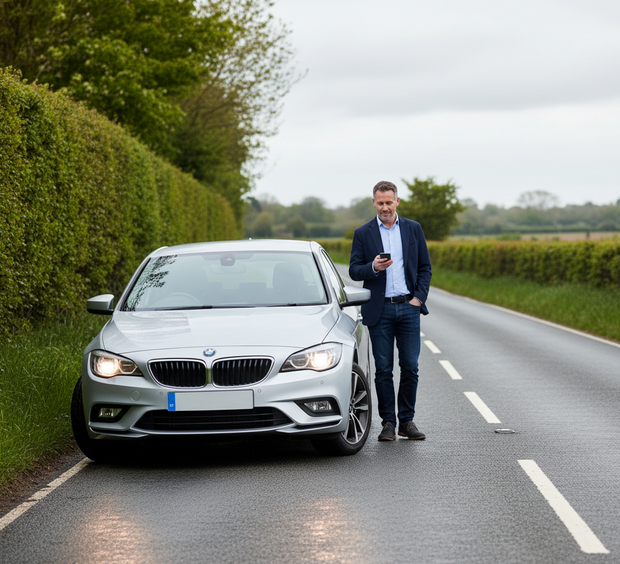
What Does Breakdown Cover Include? A Complete Guide
Breakdown cover is one of those things you hope you never need — but when you do, you’ll be very glad you have it. Whether you’ve just bought your first policy or you’re wondering if your current cover is right for you, this guide explains exactly what breakdown cover includes, what it typically doesn’t cover, and how to choose the right level for your situation.
What Is Breakdown Cover?
Breakdown cover is a type of roadside assistance policy. If your vehicle breaks down — whether due to a mechanical fault, flat tyre, flat battery, or running out of fuel — your provider sends a patrol to help you. Depending on your level of cover, they’ll either fix the problem at the roadside or arrange for your vehicle to be towed to a garage.
It is not the same as car insurance. Car insurance covers accidents and damage. Breakdown cover handles mechanical failure and getting you moving again.
The Main Types of Cover
Most providers offer breakdown cover in tiers. Understanding each level helps you choose what you actually need.
Roadside Assistance
The most basic level. A patrol comes to you and attempts to fix your vehicle at the scene. If they can’t fix it within a reasonable time, your vehicle is typically towed to a local garage. You are not usually covered if you break down within a short distance of your home.
Recovery
Includes everything in Roadside Assistance, plus your vehicle — and usually you and your passengers — can be transported to any destination of your choice, not just a local garage. Useful if you break down far from home.
Home Start
Extends your cover to include breakdowns that happen at or near your home address — typically within a quarter of a mile. Surprisingly common, since cold starts, flat batteries, and tyre faults often happen on the driveway.
Onward Travel
The most comprehensive level. If your vehicle can’t be fixed quickly, Onward Travel provides alternative transport — usually a hire car, hotel accommodation, or a contribution towards public transport costs — so your journey isn’t completely derailed.
What’s Typically Included
While policies vary by provider, most standard breakdown cover policies include:
- Roadside attendance, usually within 60 minutes
- Labour costs at the roadside
- A limited supply of emergency fuel if you run out
- Battery jump-start or replacement (some charge for parts)
- Tyre changes (you need a serviceable spare)
- Lockout assistance if you’ve locked your keys inside
What’s Usually NOT Included
This is where people get caught out. Common exclusions include:
- Pre-existing faults known before taking out the policy
- Vehicles over a certain age or weight (check your policy limits)
- Breakdowns caused by accident damage — that is for your insurer
- Parts and garage labour costs beyond the roadside fix
- Caravans and trailers unless specifically added
- Breakdowns abroad unless European cover is included
Always read the policy details. The cheapest policy is rarely the most comprehensive.
Do I Need Breakdown Cover if I Have Car Insurance?
This is one of the most common questions people ask — and the short answer is: yes, in most cases you still need separate breakdown cover.
Some car insurance policies do include a basic level of breakdown assistance as an add-on, but this is usually limited — often just a local tow to a nearby garage. It rarely includes Recovery to a destination of your choice, Home Start, or Onward Travel. If you rely on your vehicle regularly, the cover bundled with insurance is unlikely to be sufficient.
Dedicated breakdown cover policies — bought separately from a specialist provider — are nearly always more comprehensive, have faster average response times, and give you more control over what happens when you call. They are often better value too, particularly if you choose a specialist rather than a household name.
Vehicle-Based vs Personal Cover: What’s the Difference?
This distinction catches a lot of people out, so it’s worth understanding clearly.
Vehicle-based cover is tied to a specific car. If that vehicle breaks down, it is covered — regardless of who is driving. This is useful if multiple people drive the same car, or if you want to insure an older vehicle that is more likely to need assistance.
Personal cover is tied to you as an individual. You are covered in any vehicle — whether your own car, a hire car, a friend’s vehicle, or as a passenger. This suits people who drive different cars regularly, or who often travel in other people’s vehicles.
If you only ever drive one car and nobody else uses it, vehicle-based cover is usually slightly cheaper. If you drive various cars or share a vehicle with others, personal cover gives broader protection.
Single, Joint, and Family Policies
Beyond the type of cover, you will also choose how many people the policy covers.
Single policies cover one named driver. They are the most affordable option for individuals who drive alone.
Joint policies cover two people — typically partners — sharing the same or separate vehicles. Usually better value than two single policies.
Family policies cover multiple drivers and are priced accordingly. If you have several drivers in the household, it is worth comparing the cost of a family policy against adding individual policies, as the difference can be significant.
European Breakdown Cover
If you drive in Europe — whether for holidays or work — standard UK breakdown cover usually will not apply abroad. You will need to check whether your policy includes European cover or whether it needs to be added as an extra.
European cover typically includes roadside assistance and recovery within EU member states, and sometimes further afield. Response times and service quality can vary considerably by country and provider, so it is worth reading the specific terms rather than assuming the same level of service as in the UK.
If you only travel to Europe occasionally, some providers offer short-term European cover rather than upgrading your annual policy — which can be more cost-effective.
What Actually Happens When You Call?
Knowing the process in advance means you are not figuring it out in a stressful moment at the roadside. Here is the typical sequence:
- Call the number on your membership card or app. Most providers have a 24/7 helpline. Give your membership number, location, and a brief description of the problem.
- The controller assesses your situation. They may ask a few questions to understand what has happened and whether you are in a safe location. If you are on a motorway or dual carriageway, they will prioritise getting you to safety first.
- A patrol is dispatched. You will usually receive an estimated arrival time and, increasingly, live tracking of the patrol via an app.
- The patrol arrives and assesses the vehicle. In most cases, they will attempt to fix the problem at the scene. The majority of callouts are resolved roadside — a flat battery, for instance, can often be jump-started or replaced on the spot.
- If the vehicle cannot be fixed, it will be recovered according to your level of cover — to a local garage, or to a destination of your choice if you have Recovery cover.
It is worth saving your provider’s number in your phone before you need it, and keeping your membership card in the vehicle.
Which Level Do You Actually Need?
A few simple questions help narrow it down:
Do you regularly drive long distances or motorways? Recovery cover is worth having — being stranded 150 miles from home with only local tow cover is a very stressful situation.
Do you park on a driveway or street overnight? Home Start is more useful than most people realise — battery faults are one of the most common callout reasons.
Do you drive an older vehicle? Older cars break down more frequently and are harder to fix quickly at the roadside. A higher tier of cover gives more peace of mind.
Are you travelling with children or elderly passengers? Onward Travel cover means a bad day does not become a genuinely difficult situation.
Common Mistakes When Buying Breakdown Cover
These are the errors that tend to surface when people actually need to make a claim:
- Choosing on price alone. The cheapest policy often has the longest response times, the most exclusions, and the least flexibility when things go wrong.
- Not checking the callout limit. Many policies limit you to a fixed number of callouts per year — often three to five. If you drive a vehicle that needs attention regularly, this matters.
- Assuming Home Start is included. It frequently is not on basic policies. Check explicitly before assuming.
- Forgetting to add a second driver. If your partner or family member also drives the vehicle, check whether they are covered — or whether the policy needs to be personal rather than vehicle-based.
- Not reading the exclusion list. Pre-existing faults, vehicle age limits, and weight restrictions are the most common issues. Thirty minutes reading the policy document before buying is well worth the time.
- Auto-renewing without reviewing. Renewal prices are often higher than new customer rates. It takes five minutes to compare alternatives and can save a meaningful amount each year.
How to Compare Breakdown Cover Providers
Price matters, but it is not the only thing worth comparing. Look at:
- Response times — how quickly does a patrol typically arrive?
- Fix-at-scene rate — what percentage of callouts are resolved at the roadside?
- Customer reviews — independent platforms give a more honest picture than provider websites
- Policy limits — how many callouts per year are you allowed?
- What is included at each tier — the same label (e.g. Recovery) can mean different things at different providers
We have done that comparison work for you. See our independent breakdown cover comparison for a side-by-side look at the leading providers.